A national membership association, Governance Institute of Australia advocates for a community of governance and risk management professionals, equipp...
Who we are We exist to enable societal prosperity, by helping people and organisations make decisions with clarity, integrity and foresight. We believ...
This micro-credential is designed to equip participants with the skills and knowledge necessary for effective corporate governance and secretarial duties, including managing records, providing strategic advice, and ensuring compliance with legal and regulatory requirements. It also aims to enhance participants’ strategic thinking, problem-solving abilities, and understanding of ethical principles, Corporate Social Responsibility (CSR), and the impacts of digital transformation on corporate governance. The course highlights the evolving role of the company secretary, who is now seen as a chief governance and senior administrative officer with strategic and legal responsibilities, reflecting the increased expectations on corporate behaviour and governance.
By the end of the course, participants will be able to apply key skills required to manage records and documents in compliance with legal and regulatory requirements and provide strategic advice to the board. These skills include security, discretion and confidentiality in board administration. The course also aims to enhance participants’ strategic thinking and problem-solving skills, enabling them to anticipate and address senior administrative and governance challenges effectively. Upon completion, participants will be able to evaluate an organisation’s governance practices, synthesise information to design effective board processes, critically analyse board performance and put forward suggestions for improvement in board practices.
More details about the course
Learning outcomes ▼
Analyse and interpret regulatory and compliance requirements, understanding their context, purpose, and impact on an organisation’s operations.
Synthesise and implement strategic governance frameworks to enhance board effectiveness and corporate governance practices, ensuring alignment with organisational goals.
Implement strategic thinking and problem-solving skills to anticipate and address governance challenges and provide timely and strategic advice to the board while maintaining confidentiality, security, and discretion.
Course structure ▼
Module 1:
Explores the evolving role of the company secretary, covering key administrative, legal, and strategic responsibilities essential for effective board support and organisational compliance.
Module 2:
Focuses on the vital role of company secretaries and governance professionals in ensuring regulatory compliance, facilitating stakeholder communication, and advising boards on ethical decision-making, disclosure, and governance practices to support continuous improvement.
Module 3:
Critically examines the legal and procedural foundations of directors’ meetings, emphasising their strategic role in governance while equipping students with practical skills in agenda setting, convening, minute-taking, and understanding the responsibilities of key meeting roles through case law and real-world applications.
Module 4:
Discusses the legal and procedural requirements for organising general and annual general meetings (AGMs), emphasising the importance of proper convening, constitution, and conduct to ensure valid decision-making, with a focus on notices, proxies, quorum, and procedural compliance.
Module 5:
Explores the ethical and compliance responsibilities of governance professionals, focusing on ethical leadership, stakeholder engagement, and regulatory obligations and equips students to advise boards on emerging risks through applied ethical reasoning and real-world analysis.
Module 6:
Investigates the intersection of technology, innovation, and corporate governance, focusing on legal protections for IP, data privacy, and cybersecurity, while examining how digital transformation and ESG considerations reshape board responsibilities and governance strategies in light of recent regulatory developments.
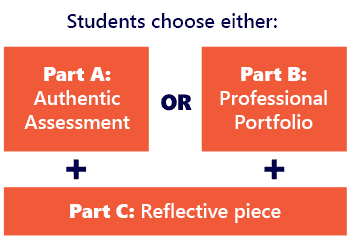
For this assessment, you are required to analyse and apply Australian company law, governance practices, and ethical principles to a hypothetical scenario, which you will then use to provide up-to-date advice to a company Board in the form of a memorandum.
Part B
For this assessment, you will draw on your professional experience to select specific activities that showcase your ability to meet the learning outcomes of this micro-credential. You will compile a curated portfolio of evidence and create a video explaining the evidence in more detail.
Part C
This assessment will measure your ability to critically reflect on your learning experience and consider how to apply the insights gained to future learning and professional practice.
For business ▼
We provide specialised in-house training to organisations who want to train large groups of staff.
What are the benefits on in-house training?
Train large numbers of staff.
Participate in customised training that caters to the needs of your staff and your organisation’s business objectives.
Invite and engage with your key clients, suppliers and contractors to ensure you’re working together with the same knowledge.
Mode of study: Online (self-paced) Time commitment: 42 hours with an access period of 8 weeks. Proficiency level: Established Digital badge issued: Micro-credential in Secretarial Practice
Complete four Micro-credentials and get a awarded Micro-credential Bundle. Each course builds your expertise step-by-step, giving you practical skills and a nationally respected credential. Flexible, accessible, and designed for busy professionals—start your journey today and grow your governance career with confidence.