Skip to content

Critical & Independent Thinking (Jul 2026)

6 July 2026 at 8:00am to 30 August 2026 at 11:30pm Timezone: Australia/Sydney
Course type Micro-credentials
Proficiency level Established
Delivery method Online
Member $1090
Non-Member $1210
CPD hours 42

Request a course guide  Book a consultation

This course introduces thinking critically and independently for the specific needs of governance professionals and leaders. Covering theoretical concepts and practical applications, the course is based on an applied theory of knowledge that enables participants to test claims, assertions, assumptions, arguments, and sources of information for their truthfulness and credibility.

Methods, tools and techniques are taught to strengthen the thinking skills of governance professionals to become proficient judges of information. This outcome will enhance their ability to resolve differences of opinion, disputes and disagreements; and to communicate their findings and conclusions in a clear and coherent manner.

An emphasis is placed on thinking independently where relevant cognitive biases and fallacies are covered to train professionals to avoid poor decision making in situations that are commonly influenced by other parties and stakeholders in organisations; for example, groupthink and herd-mentality.

The course stresses the importance of having the intellectual virtue of correct mind-set by exemplifying the valuable thinking dispositions, attitudes, and habits of a trusted and reasonable person.

By the end of the course, participants will be equipped to become strong and objective thinkers about complex issues, and to present sound and persuasive arguments to properly influence other professionals and colleagues to take the right course of action.

More details about the course

Learning outcomes
  • Demonstrate advanced knowledge of critical thinking theory and its application in evaluating the credibility of claims over a range of different types of information sources.
  • Apply relevant tools, methods, and techniques to make high-level, independent judgements that resolve problems and arbitrate between contested arguments and disagreements.
  • Exemplify the mind-set, dispositions, and values of a reasonable judge of information and disputes.
Course structure

Module 1:

  • Begins with a self-rating exercise so you can assess your current baseline for critical thinking skills and dispositions.

Module 2:

  • Introduces the key concepts of critical thinking.

Module 3:

  • Focuses on claims as the basic building blocks of argumentation.

Module 4:

  • Expands on module 3 to examine how arguments are constructed from claims, the three main types of arguments and how to evaluate each of them.

Module 5:

  • Explores independent thinking for governance and the interplay between agency and context.

Module 6:

  • Examines the critical and independent thinking practices required for governance professionals, focusing on stakeholder dynamics, practical reasoning, and the distinction between theoretical and practical reasoning to evaluate problems and devise solutions effectively.

Download course outline

Assessments

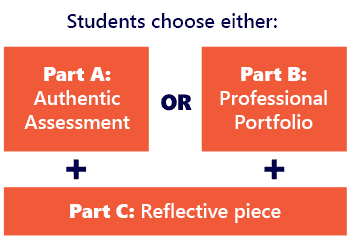
Part A

  • For this assessment, you are required to analyse two case studies and respond to the questions provided. As part of your response, you will be required to apply your learnings from the course to formulate evidence-based conclusions. Your responses should demonstrate your ability to think independently, critically assess information, and construct clear and logical arguments.

Part B

  • For this assessment, you will draw on your professional experience to select specific activities that showcase your ability to meet the learning outcomes of this micro-credential. You will compile a curated portfolio of evidence and create a video explaining the evidence in more detail.

Part C

  • This assessment will measure your ability to critically reflect on your learning experience and consider how to apply the insights gained to future learning and professional practice.
For business

We provide specialised in-house training to organisations who want to train large groups of staff.

What are the benefits on in-house training?

  • Train large numbers of staff.
  • Participate in customised training that caters to the needs of your staff and your organisation’s business objectives.
  • Invite and engage with your key clients, suppliers and contractors to ensure you’re working together with the same knowledge.

Get in touch

Key Information
  • Mode of study: Online (self-paced)
    Time commitment: 42 hours with an access period of 8 weeks.
    Proficiency level: Established
    Digital badge issued:
    Micro-credential in Critical & Independent Thinking
Micro-credential Bundle/s
  • This Micro-credential forms a part of:
    Micro-credential Bundle in Reflective Leadership
  • Complete four Micro-credentials and get a awarded Micro-credential Bundle. Each course builds your expertise step-by-step, giving you practical skills and a nationally respected credential. Flexible, accessible, and designed for busy professionals—start your journey today and grow your governance career with confidence.

Join and save

Members of Governance Institute receive a discount of up to $110 per Micro-credential — find out if you are eligible.

Capabilities : Critical & Independent Thinking