
Indigenous Governance Forum
22 July 2026 | Virtual

Governance Institute of Australia and the Australian Indigenous Governance Institute are pleased to host the 2026 Virtual Indigenous Governance Forum.

Indigenous Governance Forum
Following NAIDOC Week, this annual forum provides a timely opportunity to reflect on Indigenous governance and to explore the strategies, tools and approaches that support self-determination and nation building.
We invite you to join us to explore Indigenous governance, and the structures, systems and processes by which different First Nations peoples have framed leadership, culture, social and economic practice, self-determination and decision-making.

Agenda
Dr Michelle Deshong takes us on a journey exploring how experiences, histories, and pivotal moments shape individuals and Nations. Through personal reflections and dialogue, we are invited to examine the interplay between identity, policy, and collective memory, and consider what it means to build a nation grounded in truth, justice, and shared responsibility.
Dr Michelle Deshong, Managing Director, Deshong Consulting Pty Ltd
Chair: Ragina Rogers, Chief Executive Officer of Australian Indigenous Governance Institute
This session explores how cultural practices, relationships, and shared responsibilities nurture identity, belonging, and resilience. We highlight the vital role of community in sustaining and strengthening culture across generations. Join this conversation about the power of community-led approaches in ensuring culture continues to thrive in both traditional and contemporary settings.
Speakers:
Jahna Cedar, Jahna Cedar Consulting Pty Ltd
Ann-Maree Long, Senior Education Adviser & Co-Founder of Sandpoppy Weaving
Chair: Troy Combo, Program Manager Aboriginal Health Plan, Burnet Institute
Through the work of language custodians, educators, and communities, we explore First Nations languages as living cultural knowledge systems. Join the reflection on the deep connection between language, land, and identity, and the importance of safeguarding linguistic heritage, songlines and stories in a changing world.
Speaker:
Malachi Murljacic: Kunja person, Indigenous professional, and language practitioner
Theresa Sainty, Co-founder, Milangkani Projects
At the intersection of data and emerging technologies, there is a growing conversation around artificial intelligence (AI). Together with experts we consider how Indigenous data is collected, governed, and applied, and the implications for representation, ownership, and cultural integrity. By centring Indigenous perspectives, the discussion explores how technology can be shaped to respect community knowledge and support self-determined futures.
Speakers:
Dr Karaitiana Taiuru, Director of Taiuru & Associates
Dr Skye Trudgett, CEO, Kowa
This session reflects on how place, language, and cultural knowledges intersect across both digital and physical landscapes. Through Charles’ experiences we consider the roles of intergenerational knowledge transfer in shaping identity and sovereignty across Australia. This is a vision of what a more inclusive, truth-based nation-building process looks like when First Nations voices, knowledge systems, and sovereignty are centred and shared with the world.
Speaker: Charles Prouse, Managing Director NyikBar Consulting
Bringing together theoretical and practical, this session calls us to think on how meaningful systems change creates First Nations economic empowerment. We consider how organisations embed this as equity, accountability, and partnership in their operations. Through shared insights, the conversation brings to light pathways toward more inclusive economies and sustainable, community-driven growth.
Speakers:
Gavin Brown, CEO, co-Founder and co-owner of Yamagigu Consulting Pty Ltd
Brooke Scott, Executive Manager of First Nations Strategy at Commonwealth Bank
Chair: Jenny Glanville, Managing Director Walanmarra
This discussion with representatives from ORIC, ASIC and ACNC invites us to examine how forward-looking governance can help build equitable systems that serve communities. We consider frameworks that are transparent, inclusive, and adaptable, while acknowledging unique sociocultural realities of First Nations owned and led organisations.
Speakers:
Tricia Stroud, Registrar, Aboriginal and Torres Strait Islander Corporations
Cate Bennett, Assistant Commissioner – General Counsel and Regulatory Services Australian Charities and Not-for-profits Commission
Chair: Duncan Poulson, NT Regional Commissioner, Australian Securities and Investments Commission (ASIC)
Speaker photos and bios
 |
Cate Bennet, Assistant Commissioner, Australian Charities & Not for Profit Commission (ACNC)Cate is the Assistant Commissioner responsible for Regulatory Services, and the General Counsel at the Australian Charities & Not for Profit Commission (ACNC). Cate has considerable experience across the public and NFP sectors where she has led legal teams, served as company secretary, and worked with charity boards across a large number of international jurisdictions. As Assistant Commissioner, Cate oversees the ACNC’s regulatory functions that help charities gain and maintain charity registration, and contributes to whole of government efforts to address risks that pose a threat to trust and confidence in the charity sector. |
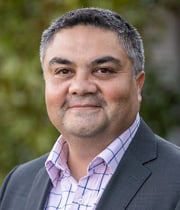 |
Gavin Brown, CEO, co-Founder and co-owner, Yamagigu Consulting Pty LtdGavin is a Wiradjuri man, born in Wellington, New South Wales and is the CEO, co-Founder and co-owner of Yamagigu Consulting Pty Ltd a business which is majority owned, led and staffed by Indigenous Australians. Gavin has become a trusted adviser to the public and private sector, and Indigenous groups throughout Australia. He was the only private sector member of the Referendum Engagement Group with the Federal Government, a member of Business Council of Australia’s Indigenous Leadership Group. He has led the development of the design capability within Yamagigu, a team that is multi-award winning – including two Good Design Awards. He is also a Founding Director of Wambal Bila Limited – a new company established for the Wellington Aboriginal Community of NSW, to take a 5% equity stake in the $450m new renewables battery being developed in Wellington; a deal which is believed to be an Australian-first. |
 |
Jahna Cedar OAM, Jahna Cedar Consulting Pty LtdJahna Cedar OAM is a proud Nyiyaparli woman from the Pilbara region of Western Australia, with ancestral ties to the Bardi Gija people of the Kimberleys. A highly respected Indigenous leader, Jahna has spent over 28 years advocating for equal rights, reconciliation, and economic empowerment for First Nations communities. She has represented Indigenous Australia on the global stage, addressing the United Nations in New York four times. With expertise in governance, leadership, business and human resources management, Jahna has held executive and board roles across multiple industries, including health, education, research, investment, and Indigenous enterprise. She has successfully driven strategic growth, policy reform, and Indigenous-led innovation, fostering meaningful pathways for First Nations people, businesses, and communities. Jahna is a TEDx speaker, a founding Blak Angel Investor, and an advocate for Indigenous entrepreneurship and economic self-determination. Her leadership has been recognised through numerous accolades, including induction into the WA Women’s Hall of Fame, the Telstra Businesswomen’s Award, the Medal of the Order of Australia (OAM), and the Australian Awards for Excellence in Women’s Leadership. Committed to breaking down barriers and creating sustainable opportunities, Jahna continues to challenge stereotypes, elevate Indigenous voices, and inspire future generations to lead with courage and authenticity. |
Troy ComboTroy is a Bundjalung man from the Northern NSW and is a highly regarded leader in Aboriginal health with over twenty years’ experience. He has held high‐level positions and has managed state and national projects working for both State and National peak Aboriginal Community Controlled Health Organisations and Hepatitis Australia. His research combines epidemiology, systems thinking, surveillance, implementation sciences and innovative research methodologies in Indigenous communities. Troys research has had impact broadly across Aboriginal health, policy and service delivery. He was an investigator on the APPRISE funded research project; Using Systems Thinking to Better Understand Risks and Protective Factors at Play for Urban Indigenous Peoples during COVID-19 (2021), findings will be used to influence future preparedness, response and recovery during future disease emergencies in Indigenous communities. In 2023 he worked in collaboration with a national reference group and a network of ten Aboriginal Community Controlled Health Services to co-design, implement and evaluate the national hepatitis C health promotion campaign “Every Yarn Counts”. The campaign evaluation proved to increase service level testing and treatment rates, workforce knowledge and addressed hepatitis C related stigma. He has served as a member of the North Coast (NSW) Human Research Ethics committee and 2024 Troy was one of four featured authors in Wileys annual First Nations Researcher Feature series, which celebrates Indigenous Research Excellence in Australia. |
|
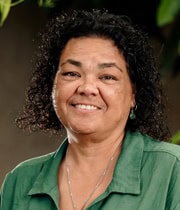 |
Dr Michelle Deshong, Managing Director, Deshong Consulting Pty LtdDr Michelle Deshong draws her connection to Kuku Yalanji and Butchulla nation and currently lives in Townsville, North Queensland. She has committed most of her professional life to the importance of Aboriginal and Torres Strait Islander peoples asserting their right to self-determination through culture reclamation, leadership, governance and political engagement. Michelle is recognised globally for her efforts in political advocacy, having worked across Indigenous affairs for over 30 years. She is among a generation of Indigenous Leaders pushing the boundaries of change, to overcome the challenges that have long beset Indigenous communities and organisations. A large body of her work has been in executive roles within the Federal government, NGO, and community sectors. Michelle has also held several governance roles including Chairperson of Supply Nation, previous Deputy Chairperson of AIATSIS, Chair of the Queensland Treaty Institute and a member of the DFAT Indigenous Advisory committee. Michelle has been a business owner for over 20 years and is passionate about supporting the growth of the Indigenous Business sector nationally and internationally. The business enables her to present and engage extensively on areas of expertise and support Indigenous peoples and communities across the country. Michelle is also an accomplished academic, completing her PhD on the participation of Indigenous women in public and political life. She was awarded a Fulbright Scholarship in 2015/2016 to work with Native communities across US, Canada and New Zealand to explore models of cultural governance and nation building. She was also awarded a Churchill Fellowship and received the National NAIDOC Indigenous Scholar of the year in 2015. |
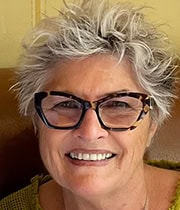 |
Jenny Glanville, Managing Director WalanmarraJenny Glanville is a proud Wiradjuri woman and a senior executive with more than two decades of leadership across First Nations health, community services and policy. Currently acting as Deputy CEO with the Wellington Aboriginal Corporation Health Service, Jenny has led some of the most complex and culturally significant programs in the sector — including as General Manager of Aboriginal Home Care at Australian Unity, where she headed the largest provider of in-home care for First Nations people in Australia. Throughout her career Jenny has been a consistent advocate for First Nations self-determination — contributing to Closing the Gap policy reform, building culturally grounded workforce models that create genuine pathways for Aboriginal people into health and community services careers, and developing Elders Circles and co-design processes that place community voice at the centre of decision-making. A gifted facilitator and public speaker, Jenny brings to every room what she describes as a deep responsibility for the care of First Nations culture, Elders, and story. We’re fortunate to have her with us today. |
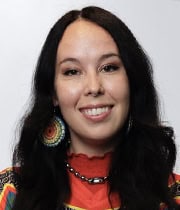 |
Anne-Maree Long, Senior Education Adviser & Co-Founder of Sandpoppy WeavingAnn-Maree Long is a proud Badjala, Woppaburra and Torres Strait Islander yeeran (woman) with a passion for social and LGBTQIA+ rights. As a Head of Community Engagement at EPIC Pathways, she is committed to further mobilising Aboriginal and/or Torres Strait Islander high school young students to see their full potential. With experience leading impactful programs such as CareerTrackers High School Program and the Young Indigenous Women’s STEM Academy in consortium with CSIRO, as well as her with with Land on Heart she brings a deep commitment to education and advocacy. A QUT Creative Industries graduate and Co-Founder of Sandpoppy Weaving, she serves on First Nations Advisory Groups including Committee for Brisbane and Pyjama Foundation. As first in her family to graduate high school, Ann-Maree is dedicated to creating opportunities and amplifying voices in the community. |
 |
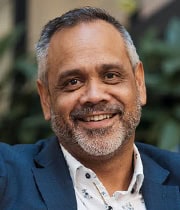
Malachi Murljacic, Indigenous Policy & Programs, Community Engagement & Kunja Language RevivalMalachi Murljacic is a Kunja professional with experience across Indigenous affairs, international development and business. For the past seven years, he has supported the revival of Kunja language, including publishing the first 50 spoken words in Kunja with his cousin Jarrah Maddison through the 50 Words Project. Outside work, he enjoys travel, culture, nature and endurance sports, and has completed a full-distance Ironman and an ultramarathon after losing 60kgs. |
 |
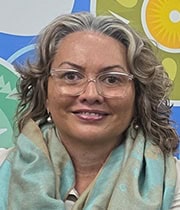
Charlies Prouse, Managing Director, NyikBar ConsultingCharles is a Nyikina man from the Kimberley, Western Australia, and has lived in Perth, Melbourne and Sydney. Charles has over 20 years’ experience in Indigenous affairs across Australia. He is the Managing Director of NyikBar Consulting – providing First Nations strategic supply chain advice to corporate Australia alongside advice to Apple Maps and Apple Australia and undertaking Place Naming work with Landgate WA and five PBCs across the Western Kimberley. Charles is proud of his early work at the Kimberley Land Council and Native Title Services Victoria to promote Caring for Country programs and was involved in the early establishment of the national Indigenous Ranger network. He started his career at the Western Australia Department of Aboriginal Affairs, mapping cultural heritage sites across the state. Charles was the Global Supplier Diversity Manager at Lendlease, leading their First Nations supplier procurement program and the development of a global supplier diversity process and reporting framework. Prior to that, Charles was CEO of Supply Nation, implementing its corporate membership fee business model and worked with the Australian Government to introduce its inaugural Indigenous Procurement Policy (IPP). His other roles have included CEO of the National Aboriginal Sporting Chance Academy (NASCA) Charles is a board member of Achieve Australia. He has previously served as Chair of Aurora Education Foundation and was a non-Executive Director The Benevolent Society. |
 |
Ragina Rogers, Chief Executive Officer Australian Indigenous Governance InstituteRagina Rogers is a proud freshwater Wiradjuri woman with strong ties to the Bundjalung Nation. Ragina is Chief Executive Officer at AIGI, taking on this role as a visionary leader with a deep commitment to supporting the social and economic sustainability of Indigenous Australians. With a philanthropic leadership career at the interface of Culture and Governance, Ragina has worked consistently in the service of Aboriginal and Torres Strait Islander communities, the disadvantaged and the vulnerable. With a Master’s degree in Governance and Leadership, Ragina’s career has spanned numerous areas, working as a paramedic, clinical educator, board director and leader in Indigenous Health. She is passionate about driving systemic change for Aboriginal and Torres Strait Islander peoples, empowering strong culture, connection to country and equity and equality grounded in self-determination. Ragina also serves as the Deputy Chair of the Twin Towns Services Clubs & Resorts Foundation and Director of the Board of the Twin Towns Services Clubs & Resorts. |
 |
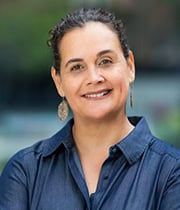
Brooke Scott, Executive Manager of First Nations Strategy at Commonwealth BankBrooke Scott is the Executive Manager of First Nations Strategy at Commonwealth Bank. A proud Gunghanji and Kuku-Yalanji woman, she brings extensive experience leading reconciliation programs and First Nations engagement at organisations including Insurance Australia Group and Qantas. Brooke is a strong advocate for the rights of Indigenous Peoples and the principle of self-determination. She is passionate about ensuring First Nations peoples have agency, voice and decision-making authority on matters that affect them. Her work focuses on embedding Indigenous governance, strengthening accountability, and creating structures that enable genuine partnership—shifting engagement from consultation to shared decision-making, long-term empowerment, and equitable participation in economic opportunities. |
 |
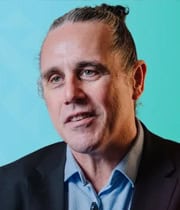
Tricia Stroud, Registrar, Aboriginal and Torres Strait Islander CorporationsTricia Stroud is the Registrar of Aboriginal and Torres Strait Islander Corporations, an independent Statutory Office Holder appointed under the Corporations (Aboriginal and Torres Strait Islander) Act 2006 (CATSI Act). Supported by the Office of the Registrar of Indigenous Corporations (ORIC), the role regulates and supports some 3400 Aboriginal and Torres Strait Islander corporations nationally, a third of whom are also registered charities. Tricia was appointed the Registrar in 2022 and has led a significant reform agenda reshaping ORIC’s regulatory approach, public performance reporting and services, systems and tools to support corporations. Tricia has operated at the senior executive level in the Australian Government’s Indigenous portfolio for over 15 year, leading strategic, policy and performance reforms. Prior to being appointed as the Registrar, Tricia served as the Chief Operating Officer at the Indigenous Land and Sea Corporation. Tricia has a strong professional record of supporting Aboriginal and Torres Strait Islander organisations achieve strong governance and self-determination for the social, cultural and economic benefit of Indigenous Australians. |
 |
Dr Karaitiana Taiuru, Director of Taiuru & AssociatesDr Karaitiana Taiuru is a Māori AI, data, and emerging-technology ethicist who helps organisations understand how modern digital systems affect identity, rights, and equity outcomes. Drawing on tikanga Māori and mātauranga Māori, he delivers practical guidance for boards, agencies, and industry leaders on AI governance, Māori Data Sovereignty, IP, and preventing bias and discrimination across the AI lifecycle. |
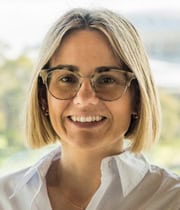 |
Dr Syke Trudgett, CEO, KowaDr. Skye Trudgett, a Gamilaroi woman, leads Kowa Collaboration with a passion for empowering First Nations communities through evaluation and research. Her PhD in evaluation and Indigenous Data Sovereignty, alongside her 15 years of experience leading research, evaluation and innovation projects, make her a recognised expert in the field of First Nations UMEL practice. Skye’s vision ensures Kowa’s work is grounded in culturally safe practices and ethical data governance. |
Our culture is the thread that weaves its way through our entire operation and keeps us focused on our core values
– Ungooroo Aboriginal Corporation, 2016 Indigenous Governance Awards Category A, shortlisted applicant.

Who should attend
Business leaders and managers cannot afford to miss this update, including:
- CEOs, CFOs, CROs
- Directors
- Company secretaries
- General counsel
- Risk managers
- Heads of internal audit, secretariats and governance
- Legal advisers
- Anyone else with governance or risk management responsibilities.
Governance and risk management consultants and advisors
The forum is relevant for all sectors including listed, non-listed, government and not-for-profit.