Women leaders step forward through Effective Director training in Tuvalu
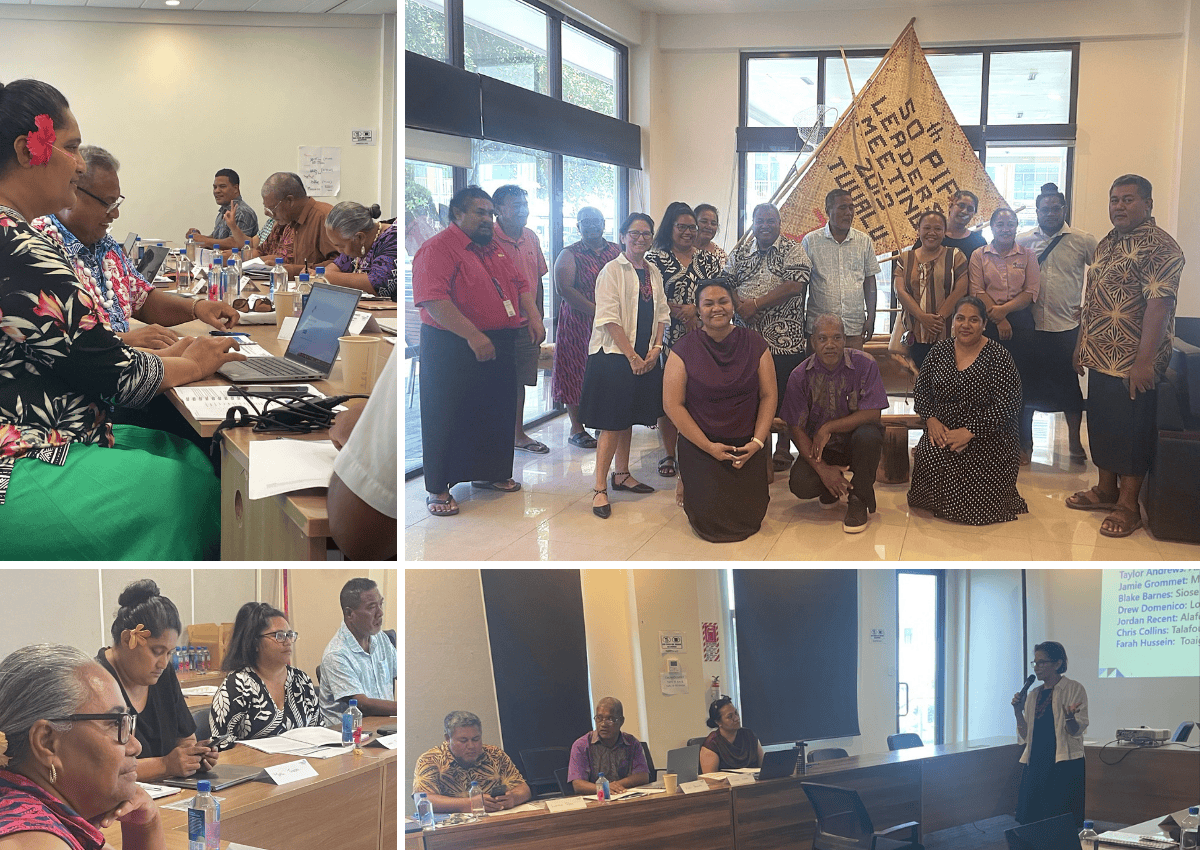
Strengthening board leadership through practical governance education in the Pacific
Women leaders helped set the tone for Tuvalu’s latest governance training, speaking with confidence, challenging assumptions and bringing sharp, practical insight to the realities of decision-making in a small island nation. Their presence was a standout throughout a three-day Board Governance Training program that brought together directors, board members and emerging leaders from across government, statutory authorities and key national organisations.
Delivered from 17 to 19 February, the program was facilitated by Pacific Partnerships for Aviation in partnership with Tuvalu’s Ministry of Transport, Energy, Communication and Innovation and the Governance Institute of Australia, with support from the Australian Government Department of Foreign Affairs and Trade. For many participants, it was their first formal exposure to structured director education, despite already carrying significant governance responsibilities.
The program centred on Governance Institute’s Effective Director course, a practical foundation designed to build capability and lift performance in the boardroom. Participants worked through the essentials of good governance, including the roles, duties and responsibilities of directors, the difference between governance and management, board oversight, ethical decision making and how to ask the questions that strengthen accountability. In Tuvalu, where leadership decisions are highly visible and public trust is closely tied to institutional performance, the fundamentals landed with real force.
Governance Institute board member Deb Jackson facilitated the training, drawing on her experience working across the Pacific, including previous delivery of governance training in Fiji. Women’s participation brought particular energy and focus to the room. Women leaders contributed actively and thoughtfully, reflecting a growing presence in governance roles across government, development and community institutions. Participants also spoke candidly about the barriers that remain. One legal officer described how difficult it can be to break into formal leadership roles where “there is still that mindset that men should be in leadership roles,” especially in parliamentary and senior governance settings.
Her message to young Pacific women was simple and powerful. “If you are very confident and you speak your mind,” she said, “that breaks the barrier of coming from a patriarchy society.” The training backed that confidence with structure and language, encouraging participants to set aside hesitation when governance responsibilities require challenge, scrutiny and independent judgement.
Women leaders also shared how the learning translated into daily practice. One participant described becoming more disciplined in professional communication, recognising that copying multiple people into emails in the name of transparency can weaken confidentiality and clarity. Others highlighted the importance of a healthy dynamic between boards and management, where directors actively interrogate information rather than passively receiving it.
Participants spoke openly about the pressures they face operating in resource-constrained environments. One participant described governance within public sector structures as “really challenging because of the constraint of resources that we have,” noting that public corporations often return to government seeking financial assistance. The course gave participants a clearer framework for accountability and oversight, helping directors step back from operational demands and focus on what boards must do: set direction, test assumptions and make decisions in the long-term public interest.
For others, the course supported readiness for change. A participant working in aviation described reform underway to separate regulatory functions from operations, creating an urgent need to understand governance “from the start” and shape new structures well. The training encouraged participants to lift their focus from immediate tasks to the bigger picture, building confidence to contribute at board level and to hold firm boundaries between oversight and management.
Communication emerged repeatedly as a core governance capability. Participants emphasised clarity within organisations and between board members, particularly when decisions affect communities directly. As one senior manager said, effective communication is “a must,” both internally and at board level. The training reinforced the importance of being transparent about constraints while protecting trust, so people understand institutions are trying their best to deliver services even when capacity is limited.
The practical tools were another highlight. Participants responded strongly to the step-by-step frameworks, templates and guidance provided through the course. One senior leader said the training exposed “a lot of the gaps” and “some of the things that we should have been doing as board members.” The appetite for follow-up learning was clear, including requests for deeper capability building in reading and scrutinising financial reports and strengthening financial oversight.
For partners, the program reinforced the broader value of governance education in the Pacific. When capable people are given the tools and confidence to govern well, institutions become stronger and public trust grows. For Governance Institute of Australia, delivering Effective Director training in Tuvalu demonstrated the impact of practical, principled governance education that respects local context and builds real leadership capability.