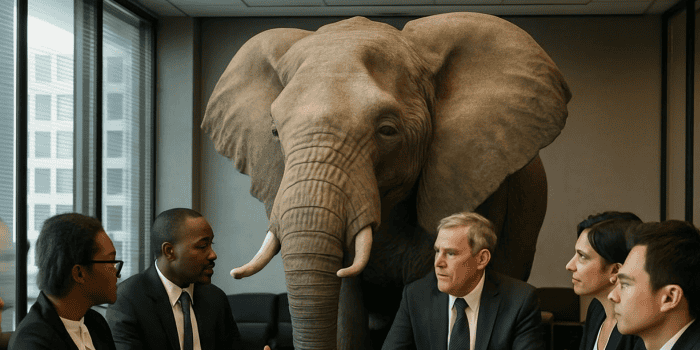
Psychosocial governance: The elephant in the boardroom
(Sponsored by DLPA)
Governance is Getting Personal
For decades, governance was about balance sheets, board packs, and regulatory filings. But here’s the uncomfortable truth: your organisation can be fully compliant on paper and still be rotting from the inside out.
Toxic cultures, burnout, and psychosocial harm are not “HR issues”, they are governance failures. And regulators, investors, and employees are no longer giving boards a free pass to look the other way.
If you’re a director or senior leader who still thinks mental health and culture sit outside your remit, you’re not just behind the curve, you’re putting your organisation (and yourself) at risk.
The New Non-Negotiable
Psychosocial risk has officially moved into the governance domain. Legislation in Australia (and globally) now treats psychosocial hazards like any other workplace health and safety issue, and indeed in many jurisdictions actually calls it out separately as a distinct requirement. That means boards have a legal and fiduciary obligation to oversee it.
But let’s be honest, most boards aren’t fully ready. They know how to audit financial statements. They’re less comfortable interrogating whether executives are quietly burning their people out, or whether workloads are structurally unsustainable.
Yet this is the new non-negotiable. Ignoring psychosocial governance isn’t just bad optics, it’s a governance breach.
Culture is the Hardest Risk to Govern
Why does psychosocial governance make boards squirm? Because unlike financial risk, you can’t bury it in spreadsheets, and it’s incredibly difficult to set an acceptable level of residual risk. With financials, directors can debate tolerances, run scenarios, and sign off on a number. With psychosocial risk, there’s no neat metric to declare: “This level of burnout is acceptable,” or “A small amount of bullying is within our risk appetite.” The very notion is absurd. Yet boards are expected to grapple with these messy, human realities with the same rigour they apply to capital allocation. That tension between the quantifiable and the deeply human is exactly why so many boards sidestep the issue, when in fact it’s where they need to lean in the hardest.
Culture is messy. It lives in stories, behaviours, and whispers at the water cooler. But just because it’s hard to measure doesn’t mean it’s optional. Directors must learn to govern the intangible.
If you can’t answer questions like:
- What’s driving staff turnover?
- Are workloads actually humanly sustainable?
- Do our leaders role-model balance or glorify overwork?
…then you don’t really know what’s happening in your organisation. And that ignorance is a risk in itself.
From Box-Ticking to Brave Questions
Too many boards treat psychosocial governance like another compliance exercise. Policies? Tick. Employee assistance program? Tick. Diversity statement? Tick.
That’s not governance, that’s window dressing. The real work is asking brave, often uncomfortable questions, such as:
If we surveyed staff anonymously, would they say they feel safe speaking up, and would their answers be honest?
Is there a culture of silent overwork that nobody reports because it’s “normal”?
What behaviours are we rewarding: results at all costs, or sustainable leadership?
Boards that only look for neat data points will miss the truth. Boards that dig into lived experience will find out what’s really going on.
Psychosocial Governance as Strategy, Not Just Risk
Here’s the provocation: psychosocial governance isn’t just about avoiding harm. It’s a competitive advantage.
Organisations with psychologically safe cultures innovate faster, retain talent longer, and bounce back from disruption more effectively. The flip side is also true: the cost of ignoring psychosocial risk isn’t just lawsuits, it’s stagnation, turnover, and reputational implosion.
The governance lens must shift from “How do we avoid being sued?” to “How do we create conditions where people can actually thrive?”
A Practical Playbook for Directors
Punchy doesn’t mean impractical. Boards can start now:
Educate yourselves: stop hiding behind “this is HR’s job.” Psychosocial risk is as much a governance literacy requirement as financial risk.
Interrogate management reports: don’t accept glossy engagement survey scores. Ask for trend data, turnover by team, burnout indicators.
Put it on the agenda: if culture and wellbeing aren’t standing items, they won’t get proper attention.
Assign accountability: make a committee (risk, audit, or people) or group explicitly responsible for psychosocial governance.
Listen directly: hold safe channels for employee voice beyond management’s filter.
The Future of Governance is Human
Here’s the big picture: governance is no longer just about systems and numbers. It’s about people.
Boards that grasp this will shape resilient, future-ready organisations. Boards that don’t will find themselves blindsided by regulators, by investors, or by a workforce that quietly walks away.
The elephant is in the boardroom. Psychosocial governance isn’t a side issue, it’s the frontier of modern governance. And the directors who treat it as such will not only meet their duty – they’ll lead.
Sponsored by: